




Post-Orthodontic Iatrogenesis Removal and At-Home Dental Whitening: A Minimally Invasive Clinical Protocol with Kiyomi Dental Products
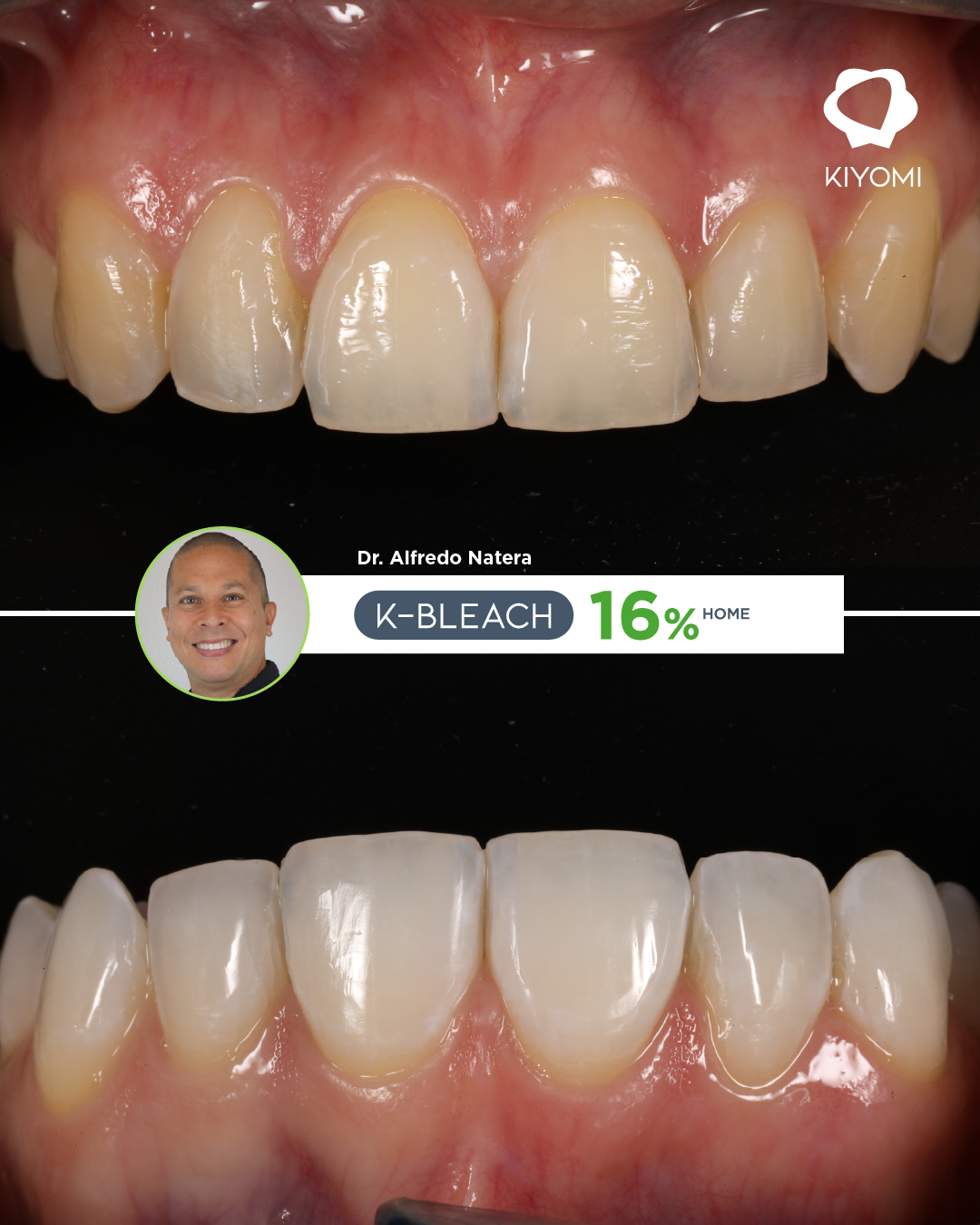
The removal of orthodontic brackets and cement residues can leave visible damage on the dental enamel if not performed using appropriate protocols. Surface roughness, loss of shine, stains, and alterations in enamel texture are among the most common complications following orthodontic treatment. Today, thanks to conservative techniques such as macroabrasion, microabrasion, and at-home dental whitening, it is possible to restore the natural aesthetics of the smile while preserving the dental structure to the greatest extent possible. In this clinical case, Dr. Alfredo Natera, an expert in aesthetic dentistry and dental whitening, demonstrates how a minimally invasive protocol combined with Kiyomi Dental solutions made it possible to eliminate post-orthodontic iatrogenesis and restore brightness, uniformity, and natural appearance to the dental enamel. The Clinical Challenge: Restoring Damaged Enamel After Orthodontic Removal Following the removal of orthodontic cement, the patient presented superficial enamel alterations caused during the removal and cleaning process after orthodontic treatment. This type of iatrogenesis can affect both the texture and the optical appearance of the tooth, leading to loss of shine and irregular surfaces. In minimally invasive aesthetic dentistry, the main goal in these cases is to preserve healthy enamel while removing material remnants and superficial irregularities and improving the overall appearance of the smile. To achieve this, the clinical protocol focused on three fundamental phases: Enamel macroabrasion using the multi-blade bur from the K-Shine kit Microabrasion to restore enamel lustre with K-Bleach RM
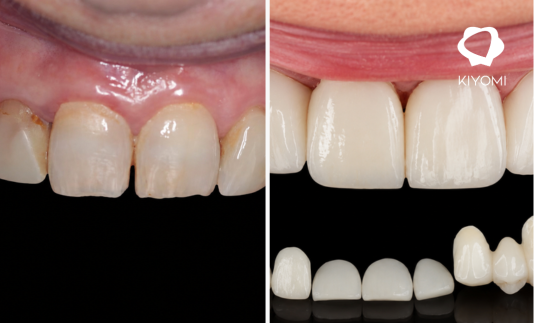
Complete oral rehabilitation with ceramic restorations: how to restore a collapsed bite using adhesive cementation and rubber dam isolation
Deciding between veneers, inlays, crowns, bridges, or implants is not just an aesthetic matter.
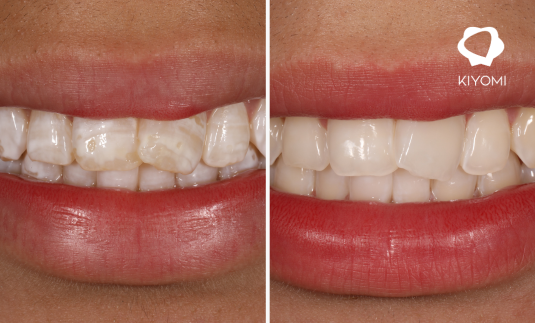
Dental Fluorosis TF4 in Adolescents: Minimally Invasive Aesthetic Treatment with Microabrasion and At-Home Whitening
Dental fluorosis remains one of the most common enamel alterations in young patients.
Post-Orthodontic Iatrogenesis Removal and At-Home Dental Whitening: A Minimally Invasive Clinical Protocol with Kiyomi Dental Products
The removal of orthodontic brackets and cement residues can leave visible damage on the dental enamel if not performed using appropriate protocols. Surface roughness, loss of shine, stains, and alterations in enamel texture are among the most common complications following orthodontic treatment. Today, thanks to conservative techniques such as macroabrasion, microabrasion, and at-home dental whitening, it is possible to restore the natural aesthetics of the smile while preserving the dental structure to the greatest extent possible. In this clinical case, Dr. Alfredo Natera, an expert in aesthetic dentistry and dental whitening, demonstrates how a minimally invasive protocol combined with Kiyomi Dental solutions made it possible to eliminate post-orthodontic iatrogenesis and restore brightness, uniformity, and natural appearance to the dental enamel. The Clinical Challenge: Restoring Damaged Enamel After Orthodontic Removal Following the removal of orthodontic cement, the patient presented superficial enamel alterations caused during the removal and cleaning process after orthodontic treatment. This type of iatrogenesis can affect both the texture and the optical appearance of the tooth, leading to loss of shine and irregular surfaces. In minimally invasive aesthetic dentistry, the main goal in these cases is to preserve healthy enamel while removing material remnants and superficial irregularities and improving the overall appearance of the smile. To achieve this, the clinical protocol focused on three fundamental phases: Enamel macroabrasion using the multi-blade bur from the K-Shine kit Microabrasion to restore enamel lustre with K-Bleach RM At-home dental whitening with 16% carbamide peroxide using K-Bleach 16% Home The entire procedure was carried out using Kiyomi Dental products, designed to provide safer, more controlled, and more predictable treatments. Dental Macroabrasion and Microabrasion: Conservative Treatments to Restore Enamel The first step of the treatment consisted of controlled enamel macroabrasion to eliminate residues, irregularities, and superficial alterations caused after the removal of orthodontic cement. Subsequently, dental microabrasion was performed in order to refine (smooth) the enamel surface and restore a more homogeneous and glossy texture. These types of procedures allow clinicians to: Improve the surface texture of the enamel Restore the natural shine of the tooth Reduce stains and superficial alterations Prepare the enamel for dental whitening treatments Preserve the natural