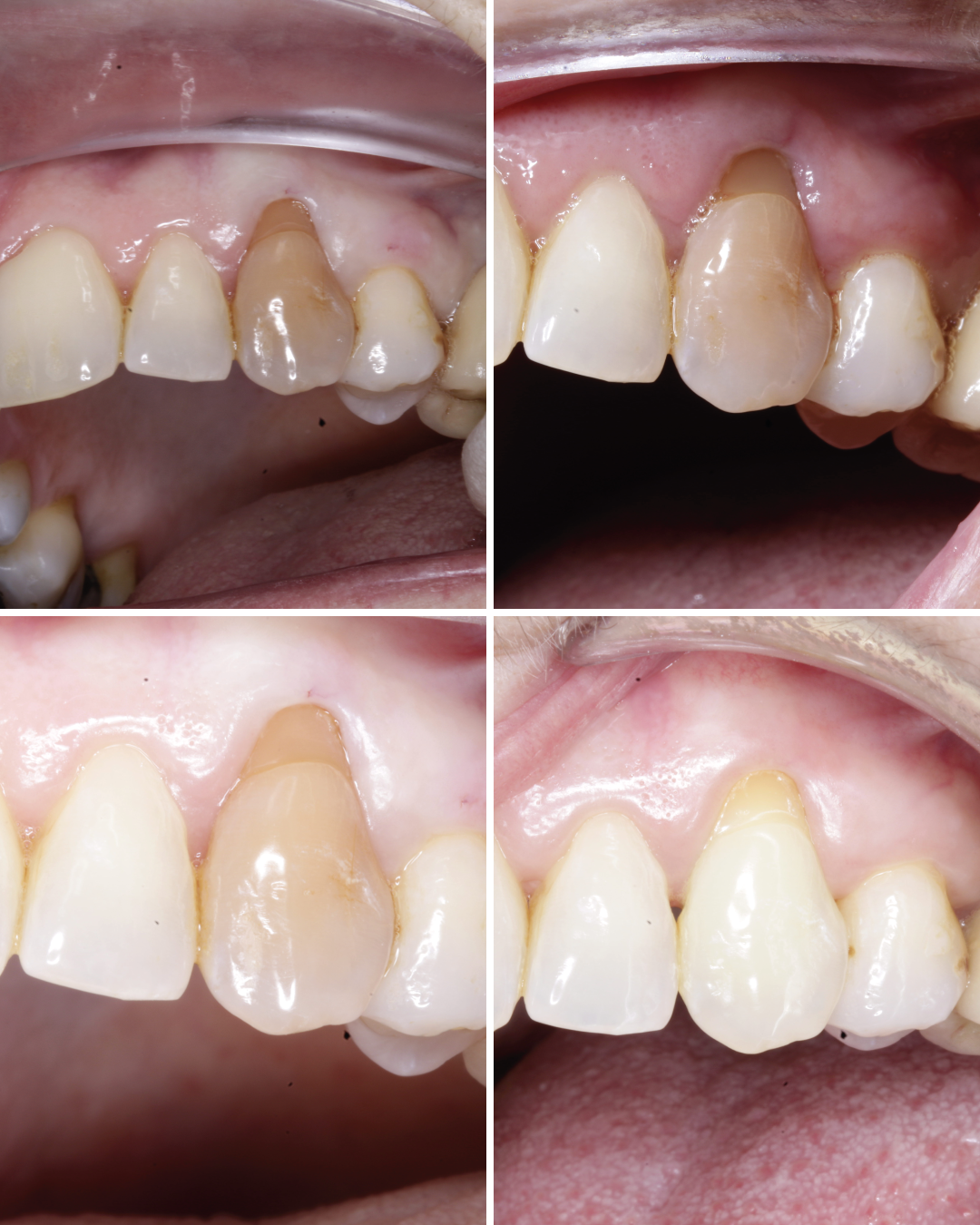



Aesthetic dentistry is playing an increasingly important role in dental practices. Patients are not only looking to restore the function of their teeth, but also for treatments that preserve the dental structure, deliver natural-looking results and improve the harmony of their smile.
Faced with this reality, many dentists consider expanding their knowledge, but not all of them are sure where to begin. Some immediately look for an aesthetic dentistry course, while others are still unsure whether this field fits their clinical practice, whether they have the necessary experience or whether they will be able to apply what they learn to their everyday treatments.
However, training in aesthetic dentistry does not necessarily mean changing your specialisation or performing highly complex procedures from the outset. It can simply be a way to gain a better understanding of the behaviour of natural teeth, develop greater control over the materials used, refine protocols and approach cases that already commonly arise in the practice with greater confidence.
Why Train in Aesthetic Dentistry?
Aesthetic dentistry is not simply about changing the colour or shape of teeth. It requires a comprehensive analysis of each case, an understanding of the patient’s expectations and the correct selection of both techniques and materials.
Good training in aesthetic dentistry can help professionals improve fundamental aspects of their clinical practice:
- Diagnosis and treatment planning.
- Shade and restorative material selection.
- The use of composites and adhesive systems.
- Anterior and posterior restorations.
- Tooth-whitening protocols.
- The finishing, texture and polishing of restorations.
- The predictability and reproducibility of results.
Knowledge enables professionals to make better-informed clinical decisions. It also helps them identify which cases can be managed within their own practice, which require further preparation and when it may be advisable to refer the patient.
You Do Not Need to Feel Ready Before You Start Training
One of the most common concerns among professionals is the belief that they need extensive previous experience before enrolling in an aesthetic dentistry course.
In reality, training is precisely where those foundations are acquired. Waiting until you feel completely prepared may mean postponing the decision to begin indefinitely.
There are programmes designed for different levels, from dentists who want to take their first steps in restorative dentistry to professionals seeking to refine specific techniques through a composite veneer course, a course in aesthetic anterior or posterior restorations, or specific training in tooth whitening.
What truly matters is choosing a training programme that explains not only which steps must be followed, but also why each step is necessary.
Understanding the protocol provides autonomy. Simply reproducing a technique without understanding its principles can create uncertainty when the clinical case does not progress exactly as expected.
The Importance of Theoretical and Practical Training
Theory is essential for understanding concepts such as adhesion, dental anatomy, the optical behaviour of materials and aesthetic treatment planning. However, dentistry is also an inherently practical discipline.
For this reason, when looking for dental courses for dentists, it is particularly important to consider programmes that combine theoretical explanations with practical training.
A theoretical and practical approach allows participants to observe the procedure, understand its principles and reproduce it under the supervision of an experienced professional. During the practical session, questions may arise that would be unlikely to occur when simply viewing a presentation or consulting a written protocol.
Practical training also makes it possible to:
- Become familiar with new materials.
- Correct minor handling errors.
- Improve the precision of each step.
- Compare different techniques.
- Resolve specific clinical questions.
- Build confidence before applying the protocol to patients.
When the aim is to introduce a technique into clinical practice, having the opportunity to practise it beforehand can make a significant difference.
Cosmetic Dentistry Course or Master’s Degree in Aesthetic Dentistry?
Not all professionals need the same type of training.
A master’s degree in aesthetic dentistry may be suitable for those seeking an extensive specialisation, with a long-term programme and a broad approach to restorative and aesthetic dentistry.
An intensive aesthetic dentistry course, on the other hand, may be more accessible for professionals who want to update their knowledge of a specific technique, address a particular clinical need or explore this field before committing to a long-term training programme.
There are also courses focused on specific procedures, including:
- Composite veneer courses.
- Composite layering courses for anterior and posterior restorations.
- Tooth-whitening courses.
- Dental photography courses.
- Courses on restoring endodontically treated teeth.
- Adhesive dentistry courses.
- Aesthetic oral rehabilitation courses.
- Courses on isolation and restorative protocols.
The choice should depend on each dentist’s starting point, the treatments they regularly perform and their professional objectives.
The goal is not to accumulate qualifications, but to find training that can translate into a genuine improvement in clinical practice.
Learning to Use Materials Correctly
The outcome of an aesthetic treatment does not depend solely on manual skills. It is also influenced by knowledge of the material being used.
Each composite, adhesive system, cement or whitening system has its own specific characteristics. Understanding its behaviour, indications and limitations makes it possible to take full advantage of its properties and reduce errors during the procedure.
For this reason, training sessions that allow participants to test products provide added value. Professionals can assess their consistency, handling, adaptability and behaviour before introducing them into their practice.
This experience helps answer common questions such as:
- How should the product be handled correctly?
- In which cases is it indicated?
- Which protocol should be followed?
- How should it be combined with other materials?
- Which mistakes should be avoided?
- How can it be integrated into the usual clinical workflow?
Useful training should not be limited to presenting a product. It should teach professionals how to use it with sound clinical judgement.
Kiyomi Dental: Products and Training in Aesthetic Dentistry
Kiyomi Dental is a brand specialising in products for aesthetic and restorative dentistry, developed with the aim of simplifying protocols and facilitating their integration into everyday clinical practice.
In addition to offering solutions for a variety of clinical procedures, Kiyomi Dental organises training courses in aesthetic dentistry where participants can discover and test its products in an educational environment.
These sessions follow a theoretical and practical approach. Professionals not only receive information about techniques and protocols, but also have the opportunity to work with materials carefully developed for aesthetic dentistry.
The courses are taught by renowned professionals within the sector, who share their clinical experience and help attendees learn some of the most innovative techniques in restorative dentistry.
This direct contact with the lecturers allows participants to understand how real cases are resolved, which decisions are made during treatment and how protocols can be adapted to different clinical situations.
The aim is not simply to learn about a product, but to understand how to integrate it correctly into a complete procedure.
What Should You Look for in a Cosmetic Dentistry Course?
Before booking a place, it is advisable to review several aspects of the programme.
Firstly, the content should be clearly explained. It is important to know which techniques will be covered, the level of the training and how much time will be devoted to the practical component.
The experience of the lecturers should also be considered. A good lecturer does not only master the technique, but also knows how to communicate it, explain its limitations and address the difficulties that may arise in clinical practice.
Other relevant factors include:
- The combination of theory and practical training.
- The opportunity to test materials.
- The number of participants.
- The clinical application of the content.
- The clarity of the protocols.
- The opportunity to resolve questions.
- The availability of information regarding the schedule, location and price.
- The possibility and ease of registering online.
A course should provide tools that can begin to be applied progressively after the training.
How to Register for Kiyomi Dental Courses
Registration for Kiyomi Dental training courses is completed online through IPG Academy, the platform where all the available information about each course can be found, including the programme, lecturers, location, date, price and registration process.
Places may be limited, particularly for training courses that include a practical component. It is therefore advisable to check the website regularly and register when a relevant course is announced.
Upcoming aesthetic dentistry courses are also shared through the Kiyomi Dental and IPG Dental social media channels.
To avoid missing new dates, professionals should keep an eye on both the website and social media posts, where the programmes, guest professionals and opening of registration are announced.
Training Does Not Mean Changing Everything Overnight
Introducing aesthetic dentistry into a practice can be a gradual process.
After an initial training course, professionals can begin by reviewing their current protocols, improving shade selection, refining isolation techniques or applying a new technique to carefully selected cases.
Each learning experience can lead to a small improvement:
- A more natural finish.
- A better-integrated restoration.
- More structured planning.
- A clearer explanation for the patient.
- Greater confidence when selecting materials.
- A more efficient and reproducible protocol.
Professional development does not always begin with a radical decision. In many cases, it starts with a course, a new technique or a question that the professional finally decides to address.
The Best Time to Continue Learning
It is normal to have doubts before enrolling in a training course. There may be concerns about the required level, the investment involved or the possibility of actually applying the knowledge acquired.
However, training should not be understood solely as a way of expanding the range of treatments offered. It is also a tool for working with better clinical judgement, discovering new possibilities and making better clinical decisions.
Whether you are actively looking for an aesthetic dentistry course or are simply curious about this field, attending a theoretical and practical training programme can help you discover which techniques best suit your way of working.
Explore Kiyomi Dental’s upcoming aesthetic dentistry courses on IPG Academy and follow the website and social media channels to learn about new training opportunities.
The next step in your professional development may begin by learning, practising and sharing experiences with other dental professionals.