
Reconstruction of tooth 22 with a fiber post and lithium disilicate crown when protocol simplicity makes the difference
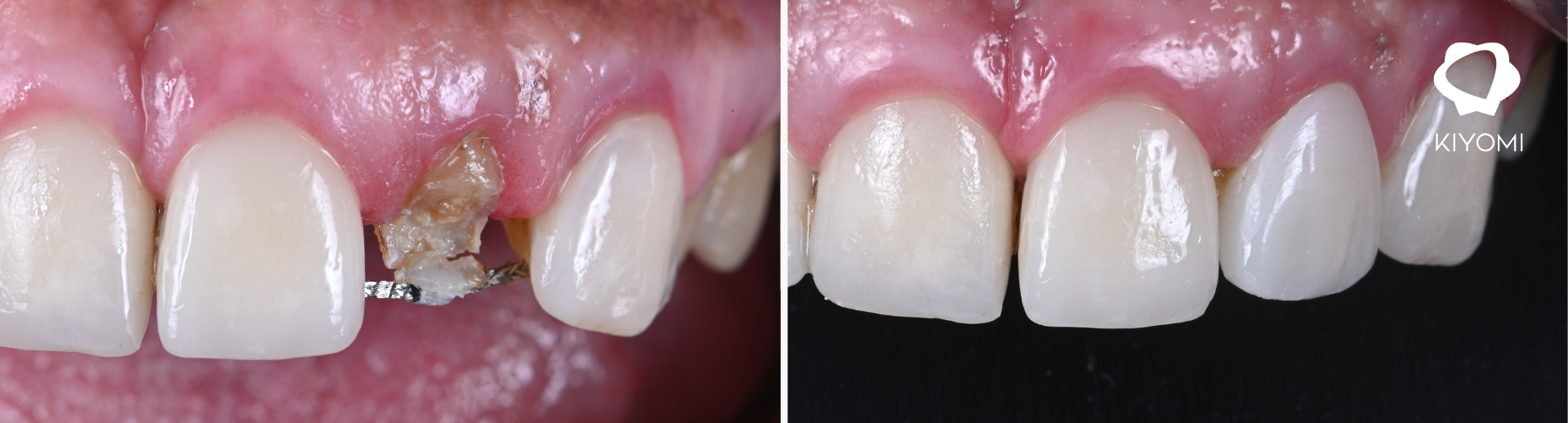
How to restore function and aesthetics to a severely compromised tooth
How to restore function and aesthetics to a severely compromised tooth
In dentistry some cases arrive at the clinic with an uncertain prognosis but hide a clear opportunity to restore the tooth’s function and aesthetics without resorting to more invasive solutions
This was the starting point of this clinical case A patient presented with decapitation of the clinical crown of tooth 22 following the failure of a previous veneer At first glance the structural loss was significant However with the right approach and a well defined protocol the goal was clear to preserve the tooth and give it a second life
This is where material selection and a clear workflow play a decisive role
From diagnosis to control the foundation of treatment
The first step was to regain control of the case Under rubber dam isolation endodontic treatment was performed ensuring a contamination free environment and proper sealing of the root canal system
This phase often underestimated determines everything that follows Without a stable foundation any subsequent reconstruction loses predictability
With endodontic treatment completed the case shifted from an emergency to a strategic reconstruction
Rebuilding what is no longer there the key moment of treatment
With virtually no remaining coronal structure reconstructing the tooth becomes the real challenge It is not just about filling but about restoring strength stability and biomechanical continuity
Placement of a fiber post allowed recovery of the lost structural axis integrating more favorably with dentin and reducing the risk of future fractures
From there core build up was performed using Dual Cem Core by Kiyomi Dental a dual cure material with inorganic fillers that allows safe handling in this type of situation Its chemical and light curing capacity ensures proper adaptation even in areas where light access is limited which is critical in intraradicular reconstructions
The entire procedure was supported by the use of K Bond Universal an adhesive system that simplifies the protocol without compromising bond strength This versatility allows you to focus on the procedure without adapting to complex or unintuitive systems
And this is exactly where the difference begins when materials do not add difficulty but support the clinical workflow
From reconstruction to aesthetics the final step
Once the tooth structure was restored the next step was to give it its final form The core was prepared and rehabilitation was completed with a lithium disilicate crown emax a widely validated solution in the anterior sector for its balance between aesthetics and strength
Final cementation not only completed the case from a functional standpoint but also restored a natural smile without compromise
What initially seemed like a lost tooth became a complete and predictable rehabilitation case
Kiyomi when the protocol flows the result improves
Cases like this do not depend only on technique but on how materials integrate into daily clinical practice
Kiyomi Dental’s philosophy is based on exactly that making protocols work without friction Materials such as Dual Cem Core or K Bond Universal are not designed to complicate procedures but to make them more intuitive more efficient and more consistent
In an environment where time precision and predictability are key having systems that reduce clinical variability represents a real advantage
A second chance without complications
Cases like this remind us that modern dentistry is not only about treatment but about making the right decisions Choosing materials protocols and approaches that transform complex situations into predictable outcomes
Because in the end giving a tooth a second chance should not be a complex process
And this is where an idea that is increasingly present in clinical practice makes sense: excellence made simple.