

Aesthetic Restoration of Enamel After the Removal of Post-Orthodontic Cement
Completing orthodontic treatment does not always mean that the aesthetic aspects of the case have been fully resolved. In some patients, the removal of the cement used during orthodontic treatment can cause visible alterations to the enamel surface, affecting its shine, texture and colour uniformity.
In this clinical case, Dr Alfredo Natera, an expert in teeth whitening, addresses an enamel iatrogenic injury caused during the removal of post-orthodontic cement. The aim of the treatment was to restore the natural appearance of the enamel tissue, improve the tooth surface and optimise its colour through a minimally invasive protocol.
Initial Diagnosis: Enamel Alterations After Orthodontic Treatment
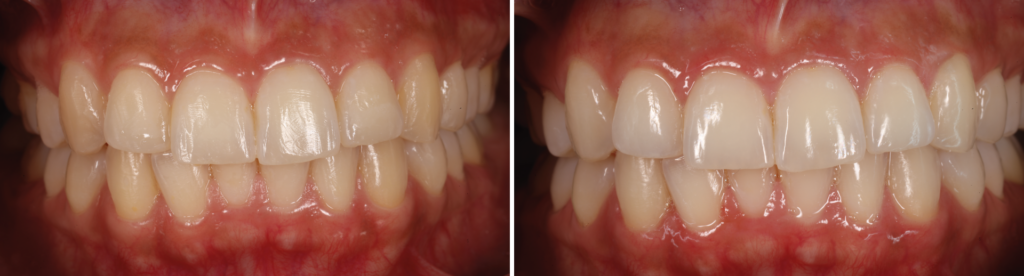
Following the removal of the orthodontic appliances, irregularities were observed on the enamel surface associated with the cement removal process. These types of alterations can compromise the final aesthetic result, as they change the way light is reflected and create areas with a loss of lustre or changes in surface texture. These irregularities may encourage plaque accumulation and, consequently, affect dental health.
Given this situation, a sequential treatment was planned, focusing first on restoring the enamel surface and subsequently improving the tooth colour through at-home whitening.
First Step: Enamel Macroabrasion
The first procedure performed was enamel macroabrasion. This stage made it possible to remove the most visible irregularities and smooth the surface affected by the iatrogenic injury caused during the removal of the post-orthodontic cement.
Macroabrasion is a key step in cases involving more pronounced surface defects, as it prepares the enamel for subsequent finishing and polishing procedures.
Second Step: Microabrasion to Restore Enamel Lustre
After performing macroabrasion using specific burs and polishers, Dr Alfredo Natera carried out enamel microabrasion to achieve a smoother, more uniform and polished surface.
This stage helped restore the lustre of the enamel tissue and improve the aesthetic integration of the tooth surface. Achieving smoother and shinier enamel enhances the perception of tooth colour, reduces the risk of plaque accumulation and provides the smile with a more natural appearance.
At-Home Whitening with 16% Carbamide Peroxide
Once the enamel surface had been restored, at-home teeth whitening was performed using 16% carbamide peroxide for 10 days.
This treatment progressively and safely improved the brightness of the smile, completing the aesthetic management of the case. The combination of macroabrasion, microabrasion and at-home whitening produced a visible, natural and conservative result.
Protocol Performed with Kiyomi Dental Products
Kiyomi Dental products were used throughout the procedure, following a protocol designed to preserve dental tissue and improve the aesthetics of the smile in a minimally invasive manner.
This case highlights the importance of correctly planning aesthetic treatments following orthodontic treatment, particularly when superficial enamel alterations caused by cement removal are present.
Final Result: A More Uniform, Brighter and Natural-Looking Smile
The results obtained show a clear improvement in tooth texture, shine and colour. Restoring the enamel lustre, together with at-home whitening, gave the smile a more harmonious and natural appearance.
This clinical case by Dr Alfredo Natera demonstrates how a sequential approach based on macroabrasion, microabrasion and teeth whitening can be an effective alternative for treating stains, irregularities and enamel alterations following orthodontic treatment.
Conclusion
Enamel alterations caused during the removal of post-orthodontic cement can affect both dental health and the final aesthetic appearance of the smile. However, an appropriate protocol can restore the tooth surface and improve its colour through a conservative approach.
The combination of macroabrasion, microabrasion and at-home whitening with 16% carbamide peroxide makes it possible to manage these cases progressively while preserving dental tissue and achieving visible clinical results.