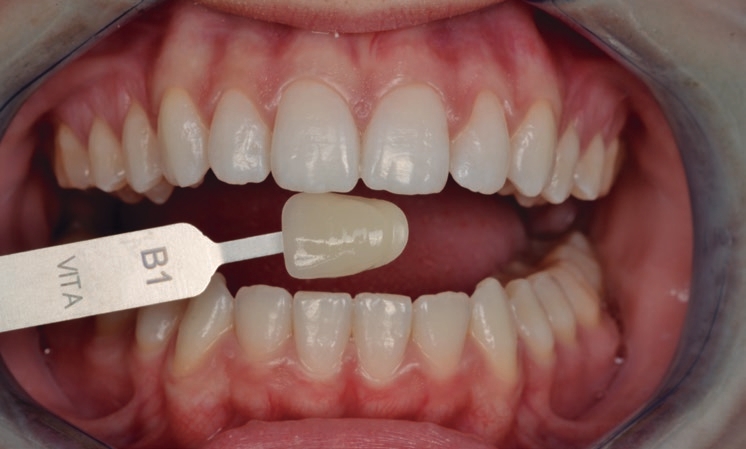


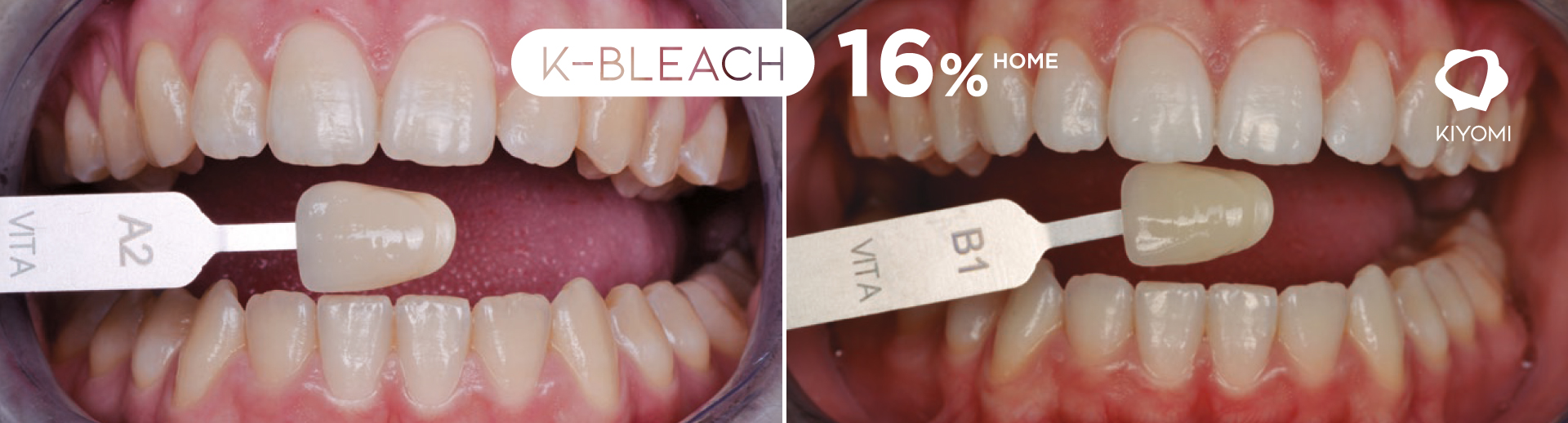
At-home whitening, transition from A2 to B1 in 4 weeks.
In the October 2024 issue of Maxillaris magazine, a clinical case was presented highlighting the advances and benefits of at-home dental whitening using Kiyomi products.
This case involved an 18-year-old patient who attended the clinic seeking aesthetic improvement, as she perceived her teeth as “very yellow.” After a thorough evaluation, the dental team at Clínica Dental Santiago Poc opted for an at-home whitening treatment using Kiyomi’s K-Bleach 16% Home, achieving remarkable results over a four-week period.
Treatment evaluation and planning.
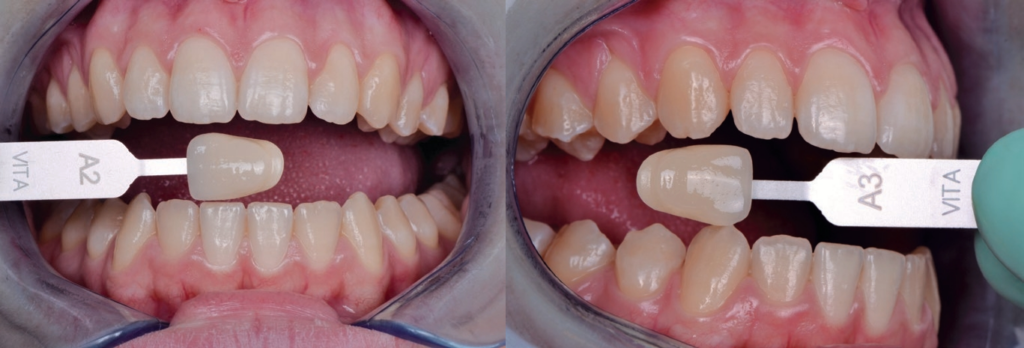
According to the VITA® shade guide, the patient presented an A2 shade in the anterior teeth and an A3 shade in the canines and posterior teeth. After a careful review of her habits, it was concluded that she was neither a smoker nor consumed pigmented foods that could stain the teeth, representing a favorable case for treatment. The presence of previous restorations was also verified, and the patient was informed that these would not change color after whitening and might therefore require replacement after treatment to match the new tooth shade.
Whitening protocol.
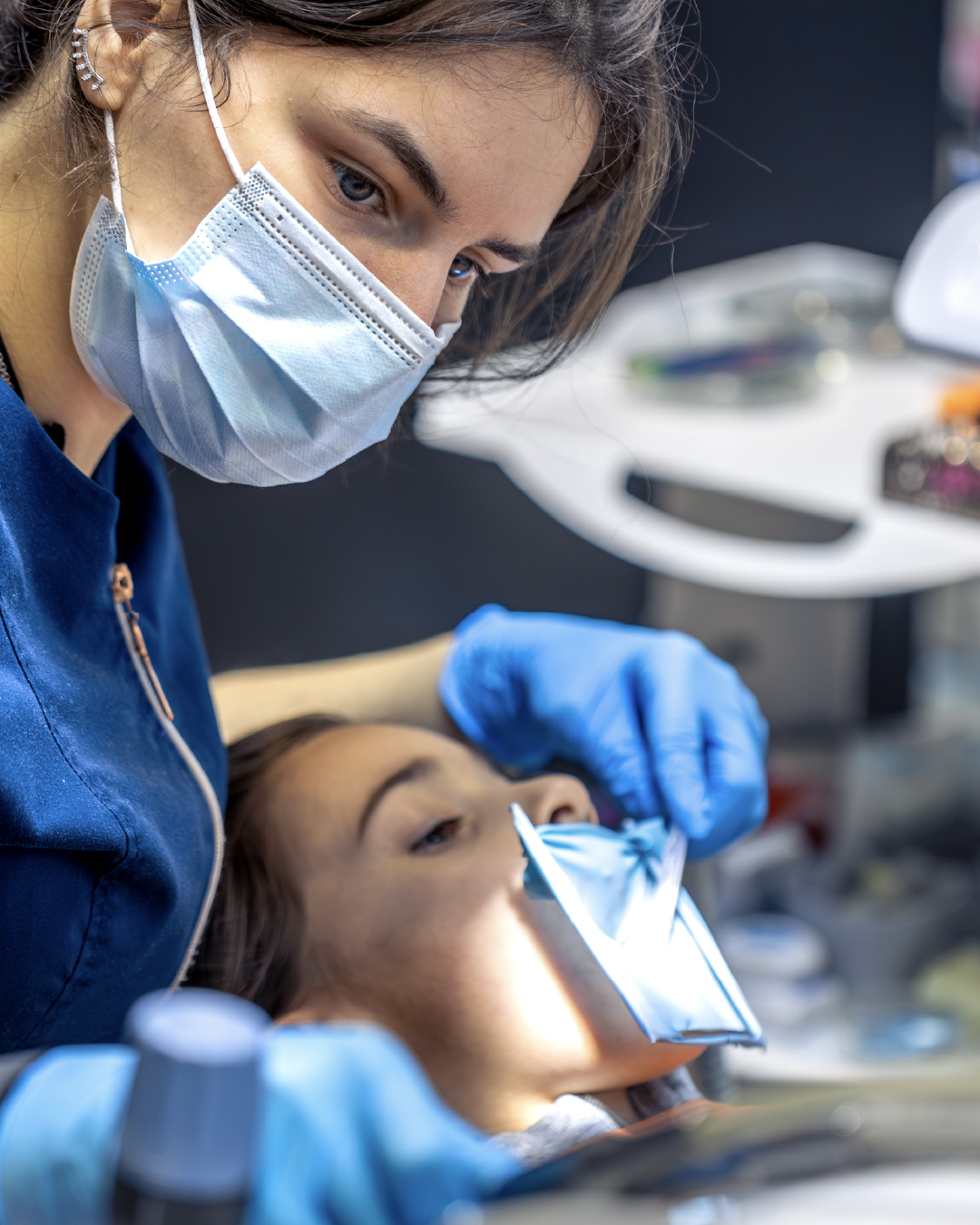
The whitening treatment was performed using Kiyomi’s K-Bleach 16% Home, a 16% carbamide peroxide. The process was divided into two phases: during the first week, the agent was applied only to the canines in order to match their shade with that of the anterior teeth. Then, over the following three weeks, whitening was extended to the entire dentition. During this period, weekly check-ups with photographic records were carried out to evaluate progress and monitor any possible occurrence of dental sensitivity.
Four weeks after starting treatment, a significant improvement was observed. The tooth color became more uniform and reached a shade lighter than B1, one of the lightest tones in the VITA® shade guide. The patient expressed high satisfaction with the results, reporting no significant discomfort throughout the process.
Discussion and conclusions
Although at-home dental whitening is a longer treatment compared to in-office procedures, it offers greater safety for the patient, as the concentration of the bleaching agent is lower (in this case, 16% carbamide peroxide compared to the 40% typically used in clinical settings). In addition, this approach allows for weekly monitoring of progress and minimizes the risk of hypersensitivity and other complications, such as external cervical resorption.
The clinical case presented in Maxillaris demonstrates how the use of high-quality products such as those from Kiyomi can achieve predictable and satisfactory results in dental whitening treatments. K-Bleach 16% Home, together with digital technology for the fabrication of trays, enabled successful whitening in a controlled and comfortable environment for the patient. This experience reinforces the preference for at-home whitening in many cases, due to its safety and long-term effectiveness.